Zirconia Preparation Guidelines
Perfect fit, esthetics and longevity with the most optimum preparation for zirconia crowns and bridges.
Zirconia Preparation Guideline
The ideal tooth preparation should feature a smooth, continuous circumferential
shoulder or chamfer with a horizontal taper of at least 5° and a vertical taper of at
least 4°. The internal angles of the shoulder should be gently rounded, as should all
occlusal and incisal edges, to prevent stress points and ensure proper fit.
The finish line must be well-defined and easily visible, with no bevels. For both
anterior and posterior restorations, a supragingival margin is preferred, as it simplifies
the process and allows the tooth-colored framework to deliver highly aesthetic results.

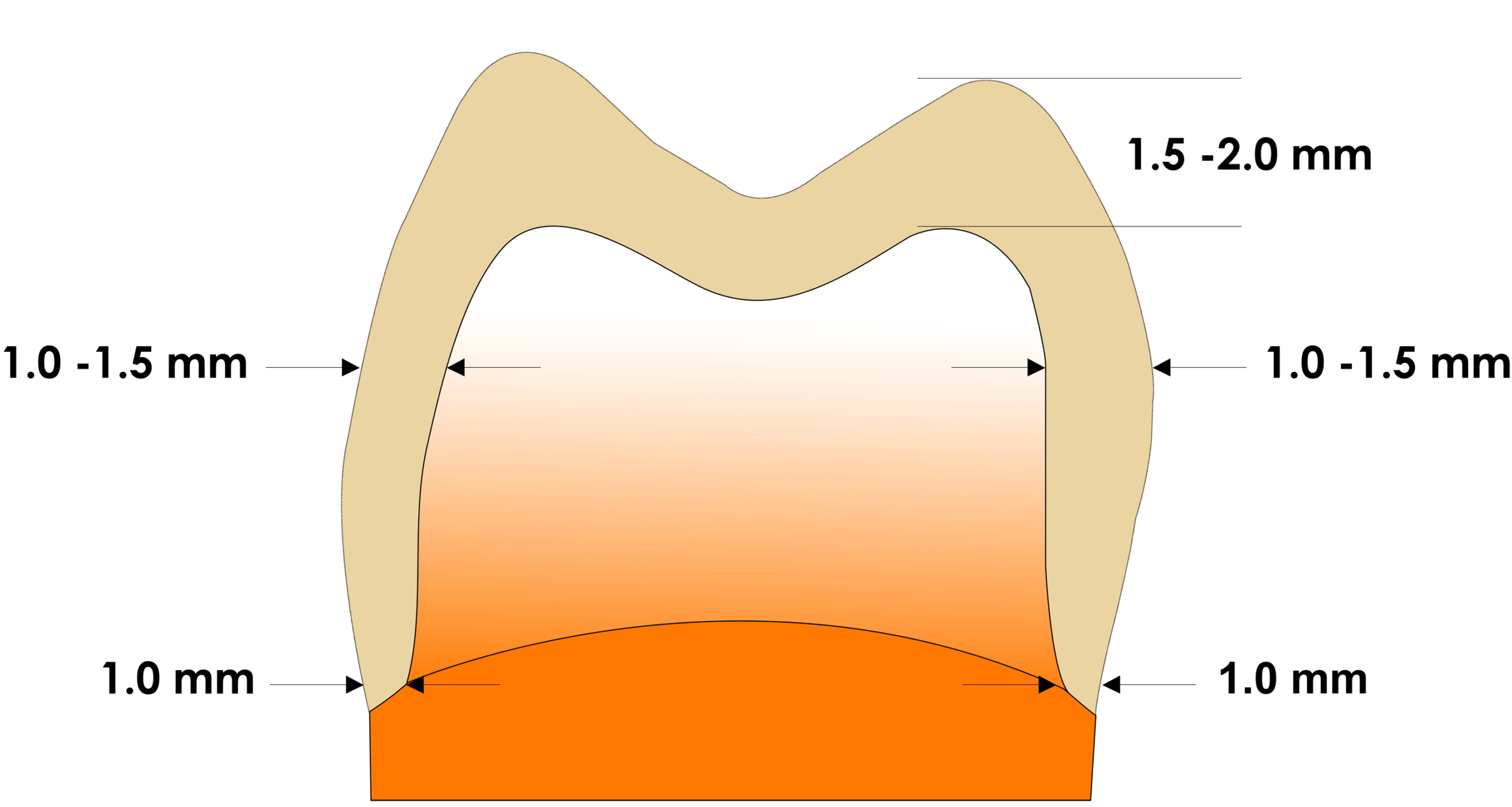
- 1.5 - 2.0 mm incisal reduction
- 1.0 - 1.5 mm labial and lingual reduction
- Round the internal line angles
- Chamfer margin
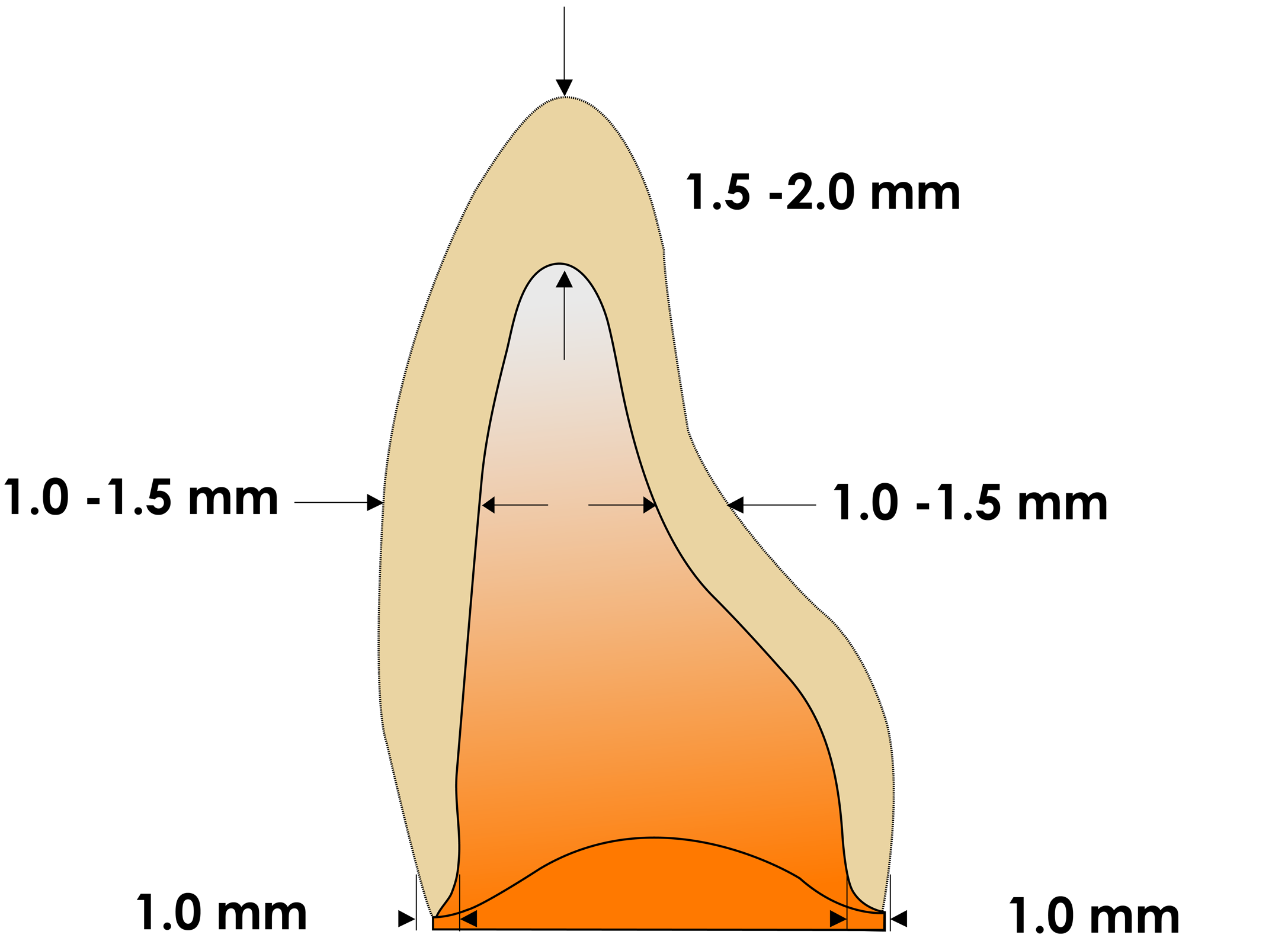
Preparation for Anterior

- 1.5 - 2.0 mm incisal reduction
- 1.0 - 1.5 mm labial and lingual reduction
- Round the internal line angles
- Chamfer margin
Preparation for Posterior
Why Tooth Preparation Design is Important?
- Uniform reduction results in optimum ceramic strength
- Adequate reduction leads to better esthetics
- Smooth edges result in lower stress
- Lower stress decreases potential for fracture
- Ceramic restorations require a passive fit
- Scanners read smooth preparations more accurately